What Is Legal Marketing?
Legal marketing is how a law firm earns attention, trust and inquiries from people who need a lawyer. It covers your website, local search visibility, paid ads, referrals, reviews, email, social media and the way your team answers the phone.
Technology now sits under every one of those channels. A firm that tracks where its calls come from and replies in minutes will usually beat a bigger firm that guesses.
How to Use Technology to Improve Legal Marketing Effectiveness
Short answer: connect your marketing to measurable outcomes, automate the slow parts of intake, and publish content that both Google and AI assistants can quote. Here is how that looks in practice.
1. Track signed cases, not clicks
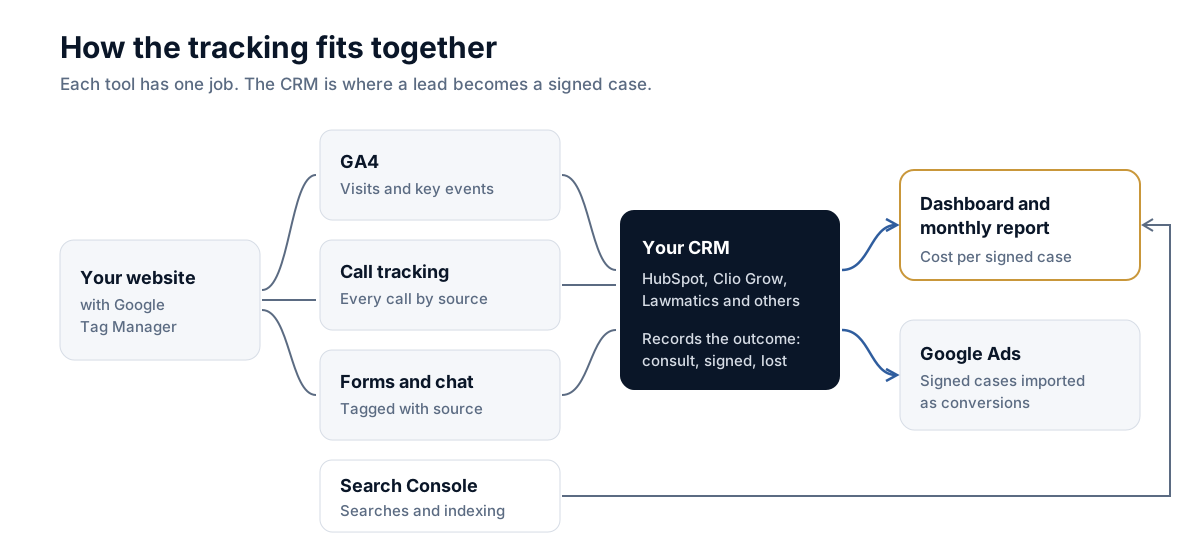
Most firms report traffic and form fills. Neither pays the rent. Set up call tracking, Google Analytics 4 key events and a CRM so every inquiry is tied to its source, and then to its outcome: consult booked, case signed, case value.
Once you can see cost per signed case by channel, budget decisions get easy. You stop funding the channel that sends 200 clicks and zero retainers.
2. Build for AI answers as well as blue links
People now ask ChatGPT, Gemini and Google's AI Overviews questions like "do I need a lawyer after a rear-end collision?" Those systems pull from pages that answer directly, show who wrote them and are consistent across the web.
What helps:
- Open each section with a plain, two-sentence answer, then expand.
- Show a real attorney byline, bar number and review date on legal content.
- Keep your firm name, address and phone identical on your site, Google Business Profile and directories.
- Add structured data (LegalService, FAQPage, Attorney) so machines can read who you are.
- Cite statutes, court rules and government sources instead of vague claims.
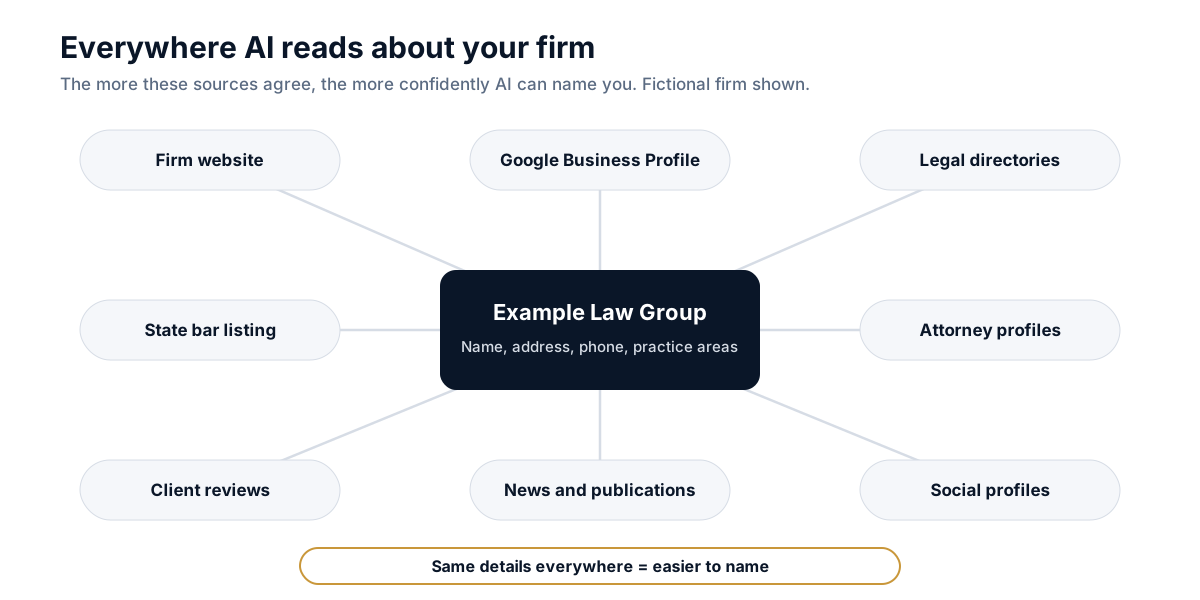
Legal topics are high stakes, so search engines hold them to a stricter standard. Thin, anonymous or recycled content is the fastest way to get ignored.
3. Use a CRM with automated follow-up
A lead that gets a reply in five minutes and a second touch the same day converts far better than one that waits until tomorrow. A legal CRM can send an instant text, book a consult from a calendar link and nudge unsigned leads without anyone remembering to do it.
4. Let analytics decide where ads go
Pay-per-click and Local Services Ads work best when you feed the platform real conversion data. Import signed-case data back into Google Ads so it learns what a good lead looks like, not just what a click looks like.
5. Keep your local presence tidy
For most practice areas, the map pack drives a large share of calls. Citation tools, review request automation and a well-kept Google Business Profile do more for a local firm than another round of blog posts.
Expert Insight: In my experience working on law firm sites, the biggest wins rarely come from adding a new tool. They come from connecting two tools that were already paid for: the call tracker and the CRM. Most firms have both and never link them.
Tech That Fixes Client Intake
Marketing creates the lead. Intake decides whether it becomes a client. This is where technology often pays back fastest.
- Live chat with human handoff: captures evening and weekend visitors.
- Missed-call text-back: an automatic message within seconds of a missed call.
- Online scheduling: removes the back-and-forth of "what time works?"
- Call recording and scoring: shows where your intake script loses people.
- E-signature: lets a client sign the same day they decide.
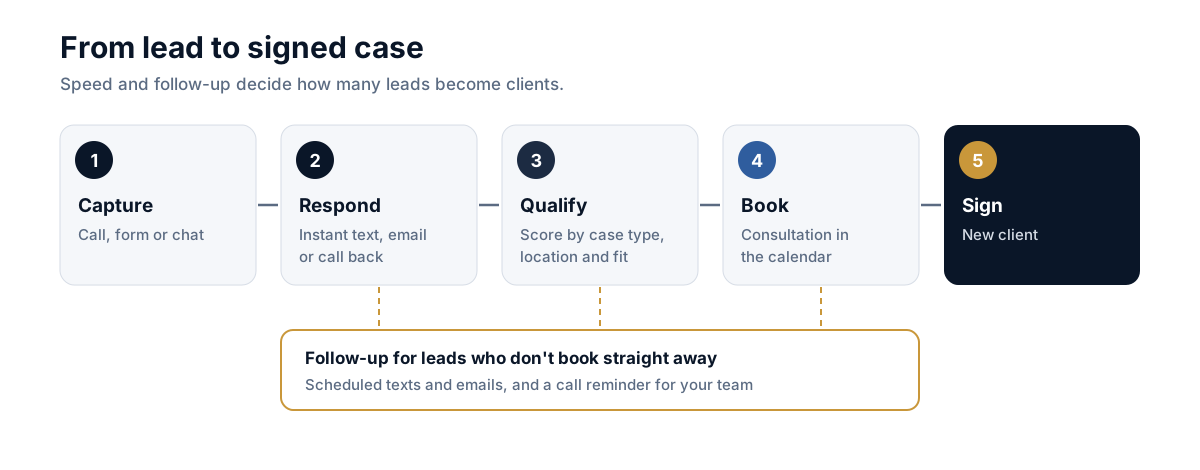
Firms that tighten intake often find they didn't need more leads at all. They needed to stop losing the ones they had. For a deeper walkthrough, read how law firms turn SEO traffic into new clients.
Is AI Marketing Legal for Law Firms?
Yes, using AI in legal marketing is generally legal, but lawyers stay fully responsible for what gets published and how client data is handled. Rules differ by state, so check your bar's guidance.
The main risks to manage:
- Misleading claims: AI can invent results, awards or case outcomes. ABA Model Rule 7.1 and state equivalents prohibit false or misleading communications about a lawyer's services.
- Confidentiality: never paste client details into a public AI tool. Rule 1.6 duties still apply.
- Disclosure and advertising labels: many states require attorney advertising disclaimers, and some expect transparency when a chatbot talks to prospects.
- Testimonials: AI-written reviews presented as real ones are a serious problem in any state.
- Accuracy: a lawyer should review every AI-assisted page that explains the law.
Used with human review, AI is a good drafting and analysis assistant. Used as an unchecked publishing machine, it creates ethics and ranking problems at the same time.
Choosing a Legal Marketing Agency
People often search for the best legal marketing agency for acquiring high-value clients, and the honest answer is that "best" depends on your practice area, market and budget. A better question is which agency can prove it brings the clients you actually want.
Look for:
- Case-level reporting. They should show signed cases and cost per case, not just rankings.
- Legal-specific compliance knowledge. Ask how they handle state advertising rules and disclaimers.
- Transparent methods. No private blog networks, bought links or mass-produced pages.
- Intake support. The best agencies help fix what happens after the click.
- Relevant proof. Case studies in your practice area and a market of similar size.
- Clear contracts. You should own your site, accounts and data.
The same checklist answers a related question: how marketing agencies improve client intake for law firms. The good ones audit call handling, add tracking and automation, and report on conversion, not just lead volume. If you're comparing options, this guide on how to choose a law firm SEO agency lays out the questions to ask.
A Simple 30-Day Rollout
| Week | Focus | Output |
|---|---|---|
| 1 | Measurement | Call tracking, GA4 key events, CRM connected |
| 2 | Intake | Missed-call text-back, online scheduling, reply-time target |
| 3 | Content and entities | Attorney bylines, schema, updated practice pages |
| 4 | Review | Attorney bylines, schema, updated practice pages |
Start small, measure honestly, and move budget toward what signs cases.
Where should your 30-day rollout start?
Tick everything your firm already has working. Nothing is saved or sent anywhere.
Tick what you have to see where to start.
Ready to Turn Your Marketing Into Signed Cases?
Page One Lawyers helps law firms connect SEO, tracking and intake so every marketing dollar can be tied to a client. Request a free marketing review and see where your firm is losing leads today.
FAQs
1. How can technology improve legal marketing effectiveness?
Technology improves results by tracking leads through to signed cases, automating fast follow-up, improving local and AI search visibility, and showing which channels deserve more budget.
2. Is AI marketing legal for lawyers?
Generally yes. Lawyers must still follow advertising rules, avoid misleading claims, protect client confidentiality and review AI-assisted content before publishing. State bar rules vary.
3. What's the best legal marketing agency for acquiring high-value clients?
There is no single best agency. Choose one that reports on signed cases and cost per case, understands legal advertising rules, has proof in your practice area and gives you ownership of your data.
4. Who are the best agencies for legal marketing?
Compare agencies on transparency, legal compliance knowledge, case-level reporting and relevant results. Ask for references from firms with a similar practice area and market size.
5. How do marketing agencies improve client intake for law firms?
They add call tracking, CRM follow-up, missed-call text-back, scheduling tools and call-quality reviews, then report on how many leads become consultations and signed cases.