Law firms generate leads through their websites by attracting the right visitors, answering their questions, and making it easy to get in touch. The aim is to bring in people who need the firm's services, not just increase website traffic.
If you're wondering how to generate leads for law firms, start by looking at how people use your website. Can they find the legal services they need? Is it easy to contact your firm or request a consultation? Making these steps simple can help more potential clients get in touch.
What Does It Mean to Capture a Lead on a Law Firm Website?
A lead is a visitor who takes a step toward hiring the firm, such as calling, submitting a form or requesting a consultation. A qualified lead is one whose legal matter fits the firm's practice areas, location and capacity.
That difference matters. A page can attract hundreds of visitors and produce no leads. Another page can attract a handful and produce several consultations.
The path usually looks like this:
Visitor → relevant page → trust → contact → qualification → consultation
Each step is a place where a potential client can stay or leave.
How to Generate Leads for Law Firms: From Visitor to Inquiry
Imagine a small-business owner who is served with a lawsuit on a Friday afternoon. They search "how long do I have to respond to a lawsuit," open the first useful result, and decide within a minute whether this firm looks like the right call.
At that moment, they aren't thinking about funnels or conversion rates. They want a clear answer, a sign that the firm can help, and an easy way to reach someone.
If the page answers the question, shows the firm handles business litigation and makes the next step obvious, there's a good chance of a call. If any of those pieces is missing, they go back to the search results.
That is what lead capture really is: removing the reasons a person has to leave. For a closer look at the search side of this journey, read how law firms can turn SEO traffic into new clients.
Start With a Page for Every Practice Area
A practice-area page is a dedicated page that explains one legal service and tells visitors how to contact the firm about it. Someone researching divorce has different needs from someone who was just arrested, so each service needs its own page.
Search language matters too. Potential clients rarely use formal legal terms. They search "how long does a divorce take" or "divorce lawyer near me," and both are worth a page that speaks to them in plain language.
Each practice-area page should cover:
- The legal matters the firm handles
- The questions a real person is likely to ask
- How the firm approaches those issues
- The locations the firm serves
- How to request a consultation
Common mistake: copying the same text across every practice-area page and swapping the service name. Each page should address the concerns and search intent of its own service.
Can SEO Help Law Firms Generate More Leads?
Yes. SEO helps law firms get found when people search for legal information or representation. It can't guarantee inquiries, though. Attracting visitors is only the first step, and your pages still need to give them a reason to stay and a clear next step.
A practical law firm SEO strategy covers five areas:
| SEO area | What it means for lead generation |
|---|---|
| Keyword research | Find searches tied to your practice areas and locations, from people researching an issue and people ready to hire |
| On-page SEO | Make each page's purpose clear through titles, headings, internal links and descriptions |
| Local SEO | Keep business details accurate, optimize your Google Business Profile where eligible, and build location pages only for areas you genuinely serve |
| Technical SEO | Help search engines crawl your key pages, and keep the site fast and easy to use on mobile |
| Helpful legal content | Publish articles that answer real questions and link each one to the relevant service page |
Google's guidance favors helpful, reliable, people-first content. For a law firm, that means answering the question properly instead of stretching a short answer around a keyword.
AI-powered search follows the same logic. Clear headings, direct answers and accurate information help both people and search systems understand a page. If AI search is on your radar, AI SEO services for attorneys are a relevant next step.
Make Contact Easy to Find and Easy to Use
A visitor should never have to hunt for what to do next. That doesn't mean a giant consultation button on every line. It means matching the next step to the visitor's intent:
- An informational article points to a related practice-area page.
- A practice-area page introduces the consultation process.
- A location page makes local contact details easy to find.
- A contact page explains what happens after someone submits an inquiry.
Then look at your own site the way a stressed visitor would. Ask:
- Can I find the phone number within seconds on a phone?
- Does the form ask only for what the firm needs at this stage?
- Are the form labels clear, and does the form work well on mobile?
- Does the page explain what happens after I submit?
- Do I see a confirmation message, and is there another way to reach the firm if the form fails?
A basic first-contact form needs a name, contact details, the general matter type and a brief description. Skip detailed, sensitive case information. A general inquiry form isn't the place for it, and it should start a conversation rather than replace full client intake.
Pro tip: legal problems are stressful. Avoid pushy sales language and give visitors clear information and room to decide.
Build Trust Before the Consultation Request
Hiring a lawyer is a serious decision, so visitors look for proof that a firm is credible before they reach out. Many will compare several firms first, which means a page has to do more than describe a service.
Attorney biographies and credentials, relevant professional memberships, clear practice-area descriptions, genuine client reviews (displayed in line with applicable rules) and useful legal articles all help. So does a professional, easy-to-read site with clear contact details.
Legal content also has to be accurate and specific to the right jurisdiction, and it should be reviewed when laws or procedures change. Never guarantee case outcomes or make claims the firm can't substantiate.
Where Do Lawyers and Law Firms Get Leads From?
Law firms get leads from organic search, local search, referrals, legal directories, paid advertising and social media. Each channel reaches potential clients in a different way, and no firm needs to invest equally in all of them.
| Channel | How it generates leads |
|---|---|
| Organic search | Visitors find practice-area pages and helpful articles through search engines |
| Local search | People looking for nearby legal help find eligible listings and location pages |
| Referrals | Past clients and professional contacts recommend the firm |
| Paid advertising | Search ads and other campaigns reach people looking for a particular service |
| Legal directories | Attorney profiles help potential clients compare firms |
| Social media | Educational posts and updates build awareness and send visitors to relevant pages |
Choose priorities based on your practice areas, location, budget and the quality of the inquiries each channel produces. Track inquiry sources before you increase spend on any of them.
How Do Law Firms Qualify Client Leads Quickly?
Law firms can qualify leads quickly by asking a few basic questions when someone contacts them. This helps the team understand what the person needs and decide what to do next.
- Understand the legal issue. Find out what help the person needs and whether the firm handles that type of case.
- Check the location. Confirm where the matter is based and whether the firm can handle it.
- Check the urgency. Ask about any deadlines or issues that need quick attention.
- Check for conflicts. Follow the firm's process before discussing confidential details or agreeing to take the case.
- Plan the next step. Schedule an initial consultation or connect the person with the right team member.
- Record the enquiry. Update the firm's system so the team can follow up easily.
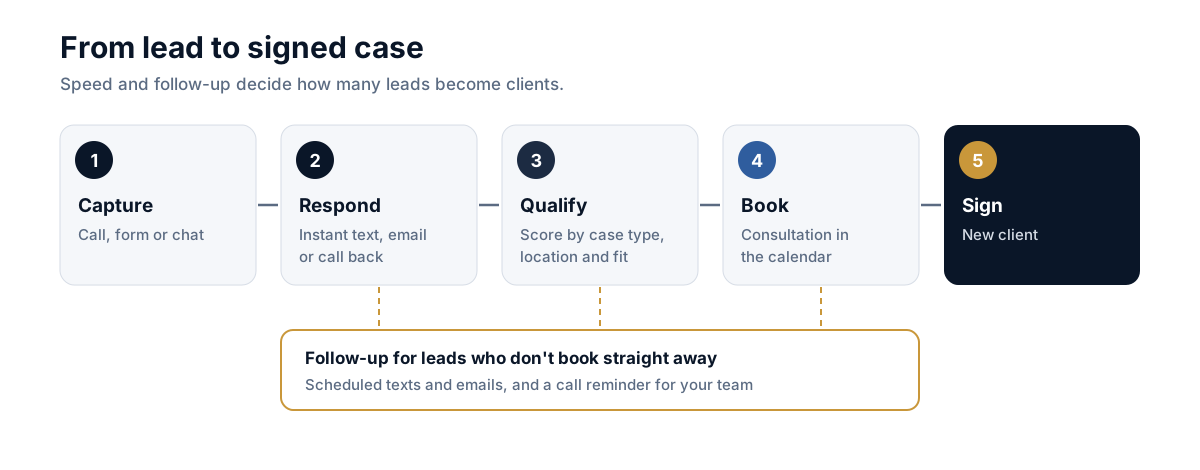
Speed matters, but a fast response shouldn't become a rushed judgment about a case's legal merit. Protect confidentiality and follow your professional obligations throughout.
Measure What Happens After the Click
Traffic can tell you that people are arriving. It can't tell you whether the right people are arriving, or whether they're becoming clients. Look at the whole path:
Organic traffic → practice-area pages → calls and form submissions → qualified inquiries → consultations → signed clients
Did you know? A page with fewer visitors can bring in more suitable consultations than a page with far more traffic. Volume and value are different things.
| Track this | To learn this |
|---|---|
| Organic traffic to practice-area pages | Whether SEO reaches the right audience |
| Phone calls and form submissions | Which contact options visitors prefer |
| Qualified inquiries | Whether leads fit your services |
| Consultations booked and attended | How well intake is working |
| New clients signed | Real marketing outcomes |
| Cost per qualified lead and per acquired client | The true return on your spend |
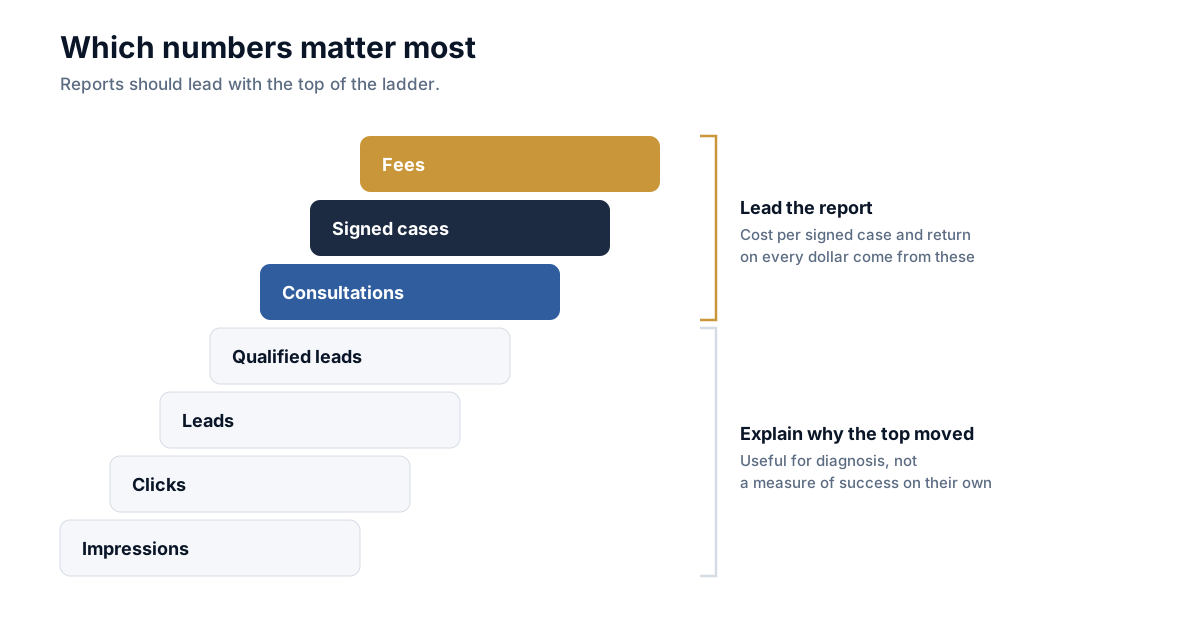
Connect analytics, call tracking and CRM records so each inquiry can be traced to its source, and configure tracking carefully to protect personal and confidential information. Then review results by channel and practice area. You'll see which pages attract suitable prospects and where visitors leave without getting in touch.
Law firm marketing ROI calculator
Use numbers from the same period. Nothing is saved or sent anywhere.
Agency fees plus ad spend for the period
Same period
What you expect to collect per case
Calls, forms and chats in the same period
Enter spend, signed cases and average fee to see your results.
How PageOne Lawyers Can Help
PageOne Lawyers is a legal marketing provider whose lead generation service covers intake funnel design, form and call tracking, CRM integration, landing-page testing and lead quality scoring. These services help firms see how visitors move through their websites and where the inquiry process can improve. Results depend on the firm's market, website, implementation and intake practices.
If organic visibility is the priority, explore PageOne Lawyers' law firm SEO services. SEO and lead generation work best together, when the right traffic lands on pages built to encourage suitable inquiries.
Turning Website Visitors Into Client Inquiries
A law firm website should do more than bring people to its pages. It should help visitors find relevant legal services, get answers to their questions, and understand how to contact the firm.
For law firms, the real value of SEO comes from reaching people who need their services and making it easier for them to get in touch. Tracking enquiries alongside website traffic can help firms understand what is working and where improvements are needed.
Frequently Asked Questions
How to generate leads for my law firm?
Build a dedicated page for each practice area, improve your local and organic search visibility, and make contact options easy to find. Then track inquiries through consultations and signed clients, so you know which activities produce real results.
Can SEO help law firms generate more leads?
Yes. SEO improves visibility for relevant legal searches and brings potential clients to useful service pages. Results depend on competition, search intent, website quality and how well the firm handles inquiries once they arrive.
How do law firms qualify client leads quickly?
They follow one consistent intake process: identify the matter type, confirm the location, check urgency and complete conflict checks. Then they book a consultation or refer the inquiry to the right person.
Where do lawyers and law firms get leads from?
Common sources are organic search, local search, referrals, legal directories, paid advertising and social media. The best mix depends on the firm's market, budget and the quality of inquiries each channel brings in.
What is the most important website element for generating legal leads?
No single element works for every firm. Relevant service pages, clear contact options, credible information, mobile usability and a consistent intake process all contribute.
What should a law firm track to measure lead generation?
Track qualified inquiries, consultations booked and attended, new clients signed, cost per qualified lead and cost per acquired client, not just traffic.