A law firm SEO strategy is a set of choices made in the right order: first, the foundation (tracking, technical fixes, your Google Business Profile, keywords chosen by case value and the practice pages that earn money); next, the work that compounds (content, links, citations and visibility in AI search); and never the shortcuts that get firms penalised or reported, like bought links, fake city pages, unreviewed AI content and misleading ranking promises. A good lawyer SEO strategy is less about doing more and more about doing things in the order that makes each step pay off.
Most firms that say "SEO didn't work for us" did reasonable things in the wrong order: blog posts before the practice pages existed, links before the site could be crawled, rankings reports before anyone was tracking calls. This guide puts the work in sequence, with a plan you can adjust for a solo practice or a multi-office firm. If you'd rather have this run for you, see our law firm SEO services.
What a Law Firm SEO Strategy Actually Is (and Why Order Matters)
A law firm SEO strategy decides three things: which searches you want to win, which pages will win them, and what has to be true about your site and your reputation before Google will trust those pages. Tactics are the individual jobs. Strategy is choosing which jobs come first and which ones you skip entirely.
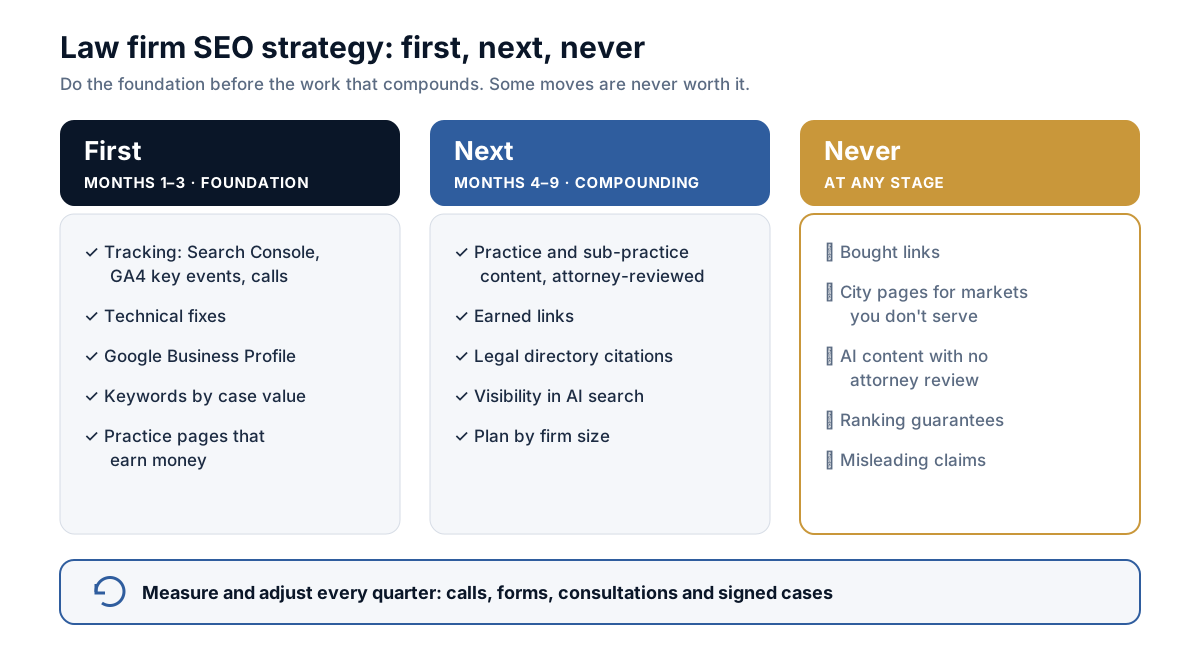
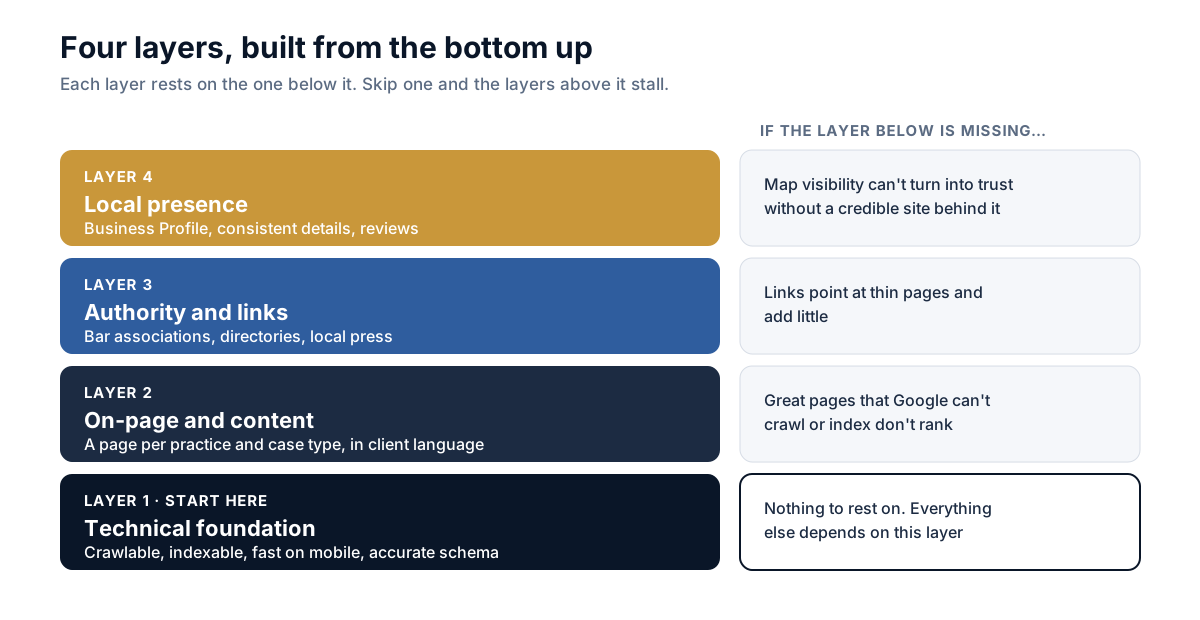
Order matters because each piece of SEO work depends on the one before it. A brilliant practice-area page can't rank if Google can't crawl it. A link from a bar association helps far less when it points at a thin page. And none of it can be judged if no one is counting the calls it brings in.
The four layers every strategy covers
Most legal SEO strategies fail in the same way: one layer gets all the attention while another is ignored. Every plan needs all four.
- Technical foundation. Google can crawl, render and index the site, pages load quickly on a phone, and structured data describes the firm accurately.
- On-page and content. Each practice area, and each important case type, has a page that answers what a client actually asks.
- Authority and links. Other credible sites, from bar associations to local press, reference and link to the firm.
- Local presence. A complete Google Business Profile, consistent name, address and phone details across directories, and a steady flow of genuine reviews.
First: Build the Foundation (Months 1–3)
The legal-specific SEO strategies with the fastest ROI are the unglamorous ones. They rarely make a good slide in an agency pitch, but they decide whether everything after them works.
Set up measurement before anything else
If you can't see which pages produce calls and form submissions, you can't tell good SEO from busy SEO. Before a single page is written, set up three things:
- Google Search Console, verified for the whole domain, so you can see which searches show your pages and which pages Google has indexed. A Google Search Console SEO strategy for law firms starts with the Pages report (what isn't indexed and why) and the Performance report filtered by page.
- GA4 key events for every way a client can reach you: phone taps, form submissions and chat or WhatsApp clicks.
- Call tracking, so calls from organic search can be told apart from calls from ads or referrals.
On pageonelawyers.com, we track click-to-call, WhatsApp clicks and HubSpot form submissions as separate GA4 key events through Google Tag Manager. That separation is what lets us say which pages bring inquiries, not just which pages get visits.
Fix the technical blockers
Google's bar for appearing at all is simple: the page isn't blocked, it returns a working status, and it has indexable content. Meeting that bar still doesn't guarantee ranking, but missing it guarantees you won't. In the first month, check:
- Which important pages Search Console reports as not indexed, and why.
- Core Web Vitals on mobile, including Interaction to Next Paint (INP), which replaced First Input Delay as a Core Web Vital in March 2024.
- Structured data: LegalService on practice and location pages, and Person on attorney bios. (schema.org now marks the older "Attorney" type as deprecated in favour of LegalService.)
Our technical SEO for law firms work starts here because a fix at this layer can unlock rankings that no amount of content will.
Complete your Google Business Profile
For most firms, the map results are where a local client first sees you. Choose the most accurate primary category, list your practice areas as services, keep hours current, and make sure the firm's name, address and phone number match your website exactly. Then start a simple review habit: ask every satisfied client, and reply to every review. Our local SEO service is built around this layer.
Choose keywords by case value, not volume
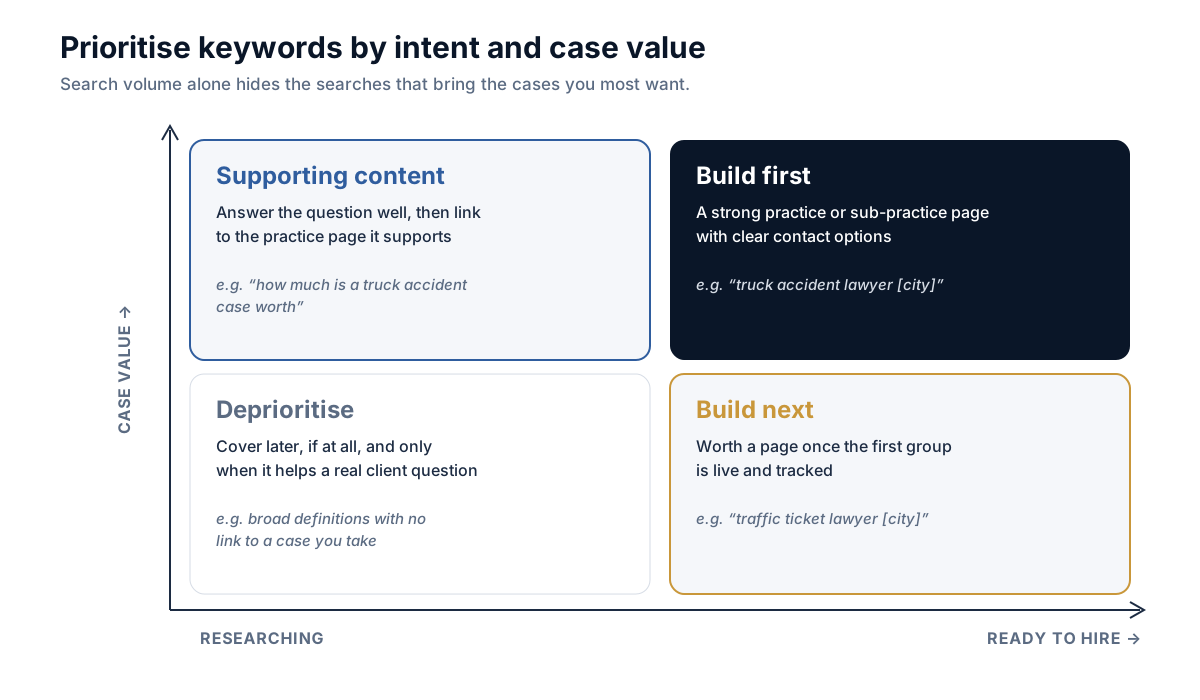
A keyword with fifty searches a month can be worth more than one with five hundred if the cases behind it are larger and the searcher is ready to hire. Rank your keywords on two things together:
- Intent: is the searcher researching ("how long do I have to file a claim") or ready to act ("car accident lawyer near me")?
- Case value: what is a typical fee for that kind of matter at your firm?
High-intent, high-value searches get pages first. High-intent, lower-value searches come next. Research-stage questions become supporting content that links to those pages.
Try it with a few of your own keywords and your own fee figures:
Which keywords should get a page first?
Add up to five keywords with your own figures. Case value is compared only against the other keywords you enter. Nothing is saved or sent.
Fill in at least one complete row to see where it ranks.
Build or fix the practice pages that earn money
Each practice area you want cases from needs its own page, written for someone who has never spoken to a lawyer: what to do next, how fees work and what a consultation involves. Name the attorney who handles these matters, link to their bio, and make calling or booking easy from the top of the page. If you only have one "Practice Areas" page listing everything, this is the single biggest fix in the first quarter. The on-page SEO for lawyers guide walks through the page template.
Want us to apply this to your firm?
Get a free SEO audit, we'll pinpoint exactly where law firm seo strategy is costing you cases.
Next: The SEO Strategies for Law Firms That Compound (Months 4–9)
Once the foundation holds, the work shifts from fixing to building. These are the SEO strategies for law firms that keep paying off long after the month they were done. When comparing legal SEO services, look for a plan that connects this compounding work to the foundation already in place.
A content strategy for law firms built on practice and sub-practice pages
A strong law firm content strategy is organised like the firm itself. Each umbrella practice page sits above case-type pages (car accidents, truck accidents and so on under personal injury), and blog posts answer the specific questions clients ask, each linking up to the most relevant page.
Three rules keep it trustworthy:
- An attorney reviews it. Name the reviewer and show when they last reviewed it.
- Cite the law. Link to the statute or rule you're explaining.
- Update honestly. Change the date only when the content has really changed. Google says plainly that changing dates to look fresh doesn't help.
One genuinely useful, attorney-reviewed page a month beats four generic ones. Our legal content writing service follows the same rules.
Link building strategies for law firms that hold up
Links still matter, but only the kind that would exist even if search engines didn't. Good link building strategies for law firms look like ordinary professional activity:
- Bar association and legal directory profiles.
- Local press commenting on a court decision or a change in the law.
- Speaking at, or sponsoring, community organisations the firm actually supports.
- Guest analysis for legal publications.
Buying links that pass ranking credit is against Google's spam policies, and the risk lands on your firm, not the vendor's. See how we approach legal link building.
Local citation building strategies for attorneys
Citations are mentions of your firm's name, address and phone number on other sites. Start with the legal directories clients and Google both use, such as Avvo, Justia, FindLaw, Martindale and your state bar, then your city's main business listings. Consistency matters more than quantity: one wrong old address repeated across fifty directories causes more trouble than a missing listing. When the core directories are accurate, stop adding listings and move your effort to reviews and content.
Law firm AI search optimization strategies, without the hype
AI Overviews and AI Mode have changed what a results page looks like, and plenty of agencies now sell "GEO" as a separate service. Google's own documentation is direct: there are no additional requirements to appear in AI Overviews or AI Mode, and no special markup or AI text files are needed. The same foundations apply.
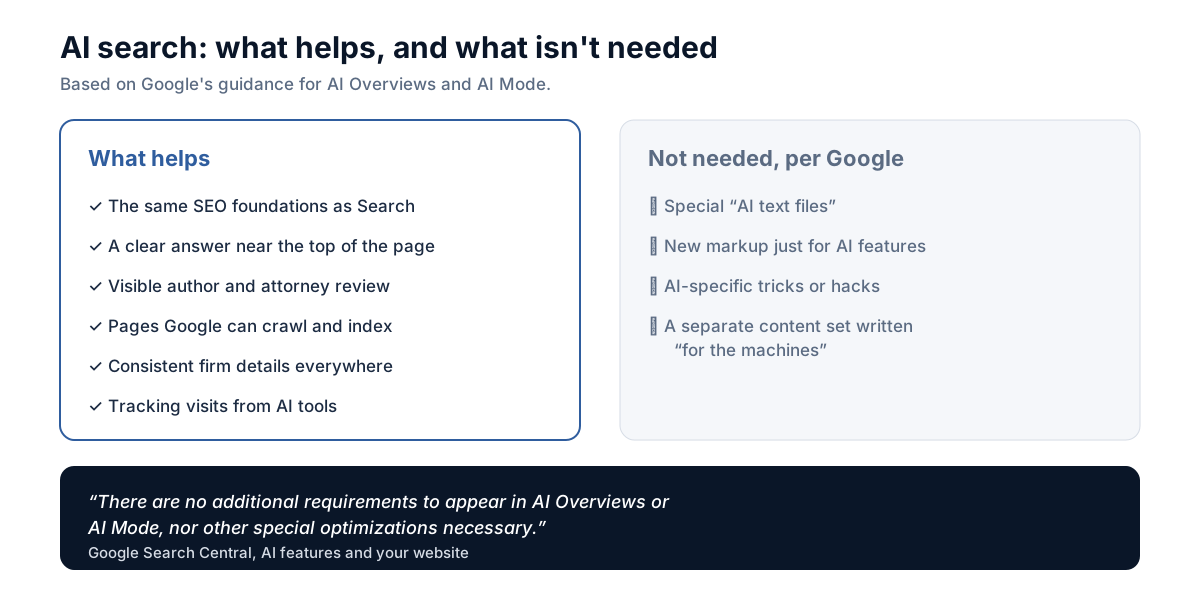
In practice, the law firm AI search optimization strategies worth your time are the ones that help any reader:
- Answer the question in the first lines of the page.
- Show who wrote and reviewed it.
- Keep pages crawlable and indexable.
- Make your firm's details consistent everywhere they appear.
Then measure it. Visits from ChatGPT, Perplexity and Gemini appear in GA4 as referral traffic you can group into its own channel, although some AI-driven visits arrive with no referrer at all. Our AI SEO and GEO work is built on that same honest baseline.
Adjust the Plan to Your Firm's Size
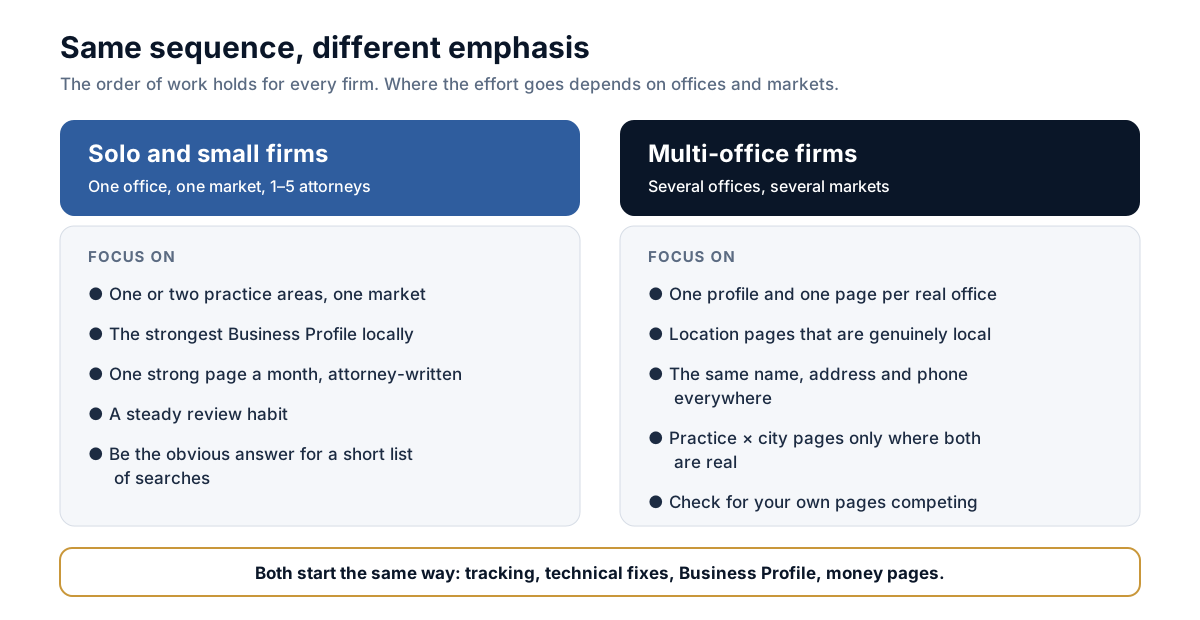
The order above holds for every firm. What changes is where the effort goes.
Effective SEO strategies for small law firms
A solo practice or a firm of two to five attorneys can't out-publish a national firm, and shouldn't try. The effective SEO strategies for small law firms are narrow and local. Pick one or two practice areas and one market. Make your Google Business Profile the best in your area. Then add one strong sub-practice page or client-question post a month. That's how small firms get more clients from search without a large budget: by being the obvious answer for a short list of searches in one place. There's more on this in our solo and small firm SEO guide.
SEO strategies for law firms targeting multiple locations
For multi-office firms, the risk is duplication. Good SEO strategies for law firms targeting multiple locations follow a few rules:
- One Business Profile and one location page per real office. Google's profile guidelines don't allow a profile for a virtual office unless it's staffed during business hours.
- Location pages that are genuinely local. Give each page the office address, the attorneys there, local outcomes and directions, rather than the same text with the city swapped.
- A practice × city structure only where both are real. Large sets of near-identical city pages built only to rank fall under Google's doorway abuse policy.
Then check Search Console regularly for two of your own pages competing for the same search, and merge or differentiate them.
Answer a few questions about your firm to get your own first-and-next list:
Build your firm's SEO plan
Answer three questions to get your own first-and-next list. Nothing is saved or sent.
1. Your firm
2. Practice areas you want cases from
Choose your firm type to see your plan.
Never: The SEO Moves That Cost Law Firms Cases
Some shortcuts don't just waste money; they put the firm's visibility, or its standing with the bar, at risk. Never:
- Buy links or directory link packages. Paid links that pass ranking credit break Google's spam policies, and the cleanup is slow.
- Build city pages for markets you don't serve. Pages that exist only to rank in a city, with no office or attorney there, are doorway pages in Google's terms.
- Publish AI-generated content without attorney review. Google allows AI-assisted content, but mass-producing pages mainly to rank is scaled content abuse, and on legal topics an error can mislead someone about their rights.
- Hire anyone who guarantees rankings. Google is explicit that even a fully compliant page isn't guaranteed to be indexed or ranked.
- Change dates without changing the content. It doesn't make a page "fresh", and Google says so.
- Make claims your bar wouldn't accept. ABA Model Rule 7.1, and your state's version of it, prohibits false or misleading communications about a lawyer's services. That covers unqualified "best lawyer" claims, results presented without context, and reviews you can't stand behind.
Measure What Matters, Then Adjust (Months 10–12 and Beyond)
Rankings are a symptom. The numbers that tell you whether a law firm SEO strategy is working sit further down the path: organic calls and form submissions, the pages they came from, consultations booked, and cases signed. If those four are moving, the strategy is working even when a favourite keyword isn't.
Review the plan every quarter: what produced inquiries, which pages Google isn't indexing, and which competitors moved. Rebuild it every year, or sooner if your practice areas, offices or markets change. The how to turn SEO traffic into new clients guide covers the measurement path in detail.
Where SEO Fits in Your Law Firm Digital Marketing Strategy
SEO is one channel in a law firm digital marketing strategy, and it does a specific job: it builds visibility you own, which keeps working without a per-click cost. Paid search buys visibility immediately while SEO builds, which is why many firms run both in the first year. PPC for law firms covers that side, and the SEO vs paid ads comparison explains how the two work together. Referrals, reviews and your reputation in the local legal community feed all of it, because the same trust that earns a referral earns a link and a five-star review.
Your First 30 Days
If you do nothing else this month, do these five things:
- Verify Search Console and set up GA4 key events and call tracking.
- Check which important pages aren't indexed, and fix the reasons.
- Complete your Google Business Profile and confirm your firm's name, address and phone number match everywhere.
- List your top keywords with their intent and case value, and pick the first three pages to build or fix.
- Write down the "never" list and share it with whoever touches your site.
Want a second pair of eyes on where to start? Get a free law firm SEO audit, or see how we build programs on our law firm SEO services page.